
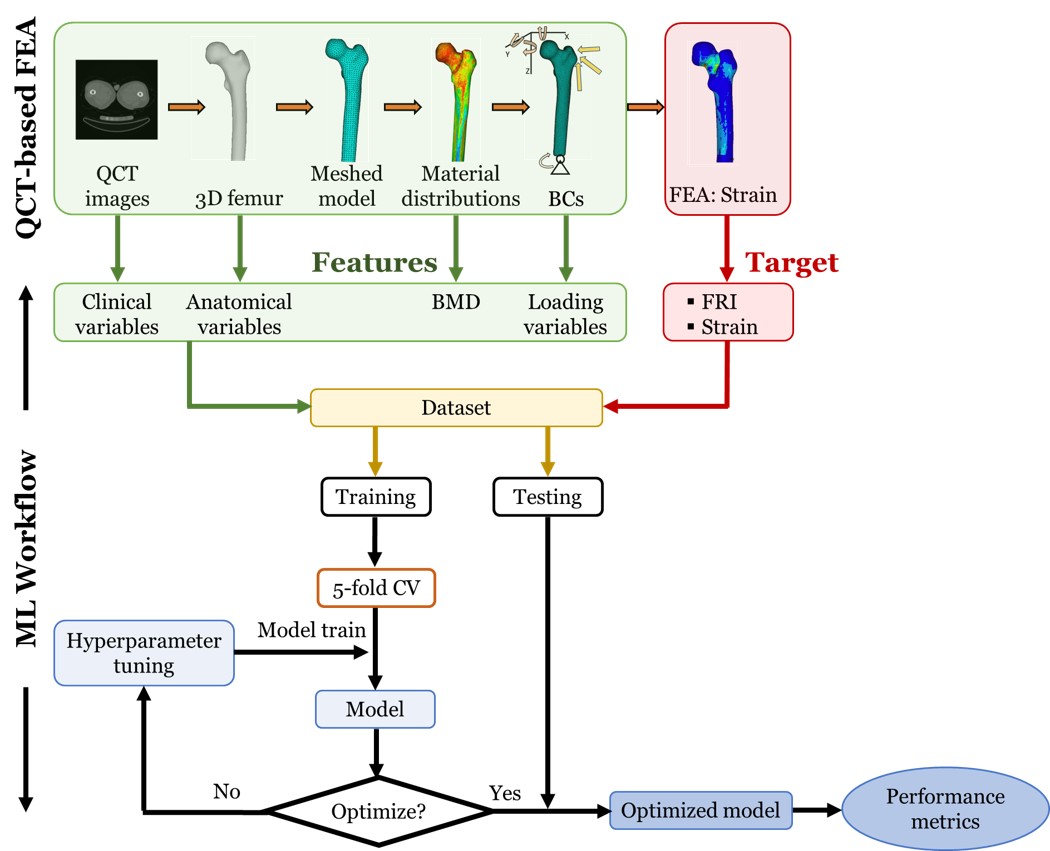
AI-powered precision diagnostics can be a game changer for providing more accurate, faster, reliable and accessible healthcare. Hip fracture owing to osteoporosis is one of the key public health concerns specially for geriatric people, whose sufferings as well as the cost of treatment can be reduced if the fracture risk can be predicted a priori. While traditional scientific computing could accuratley predict hip frature risk, ML/DL-driven model can overcome the complexity of tradional computaional modeling and enable its predictive power in clinical diagnosis.
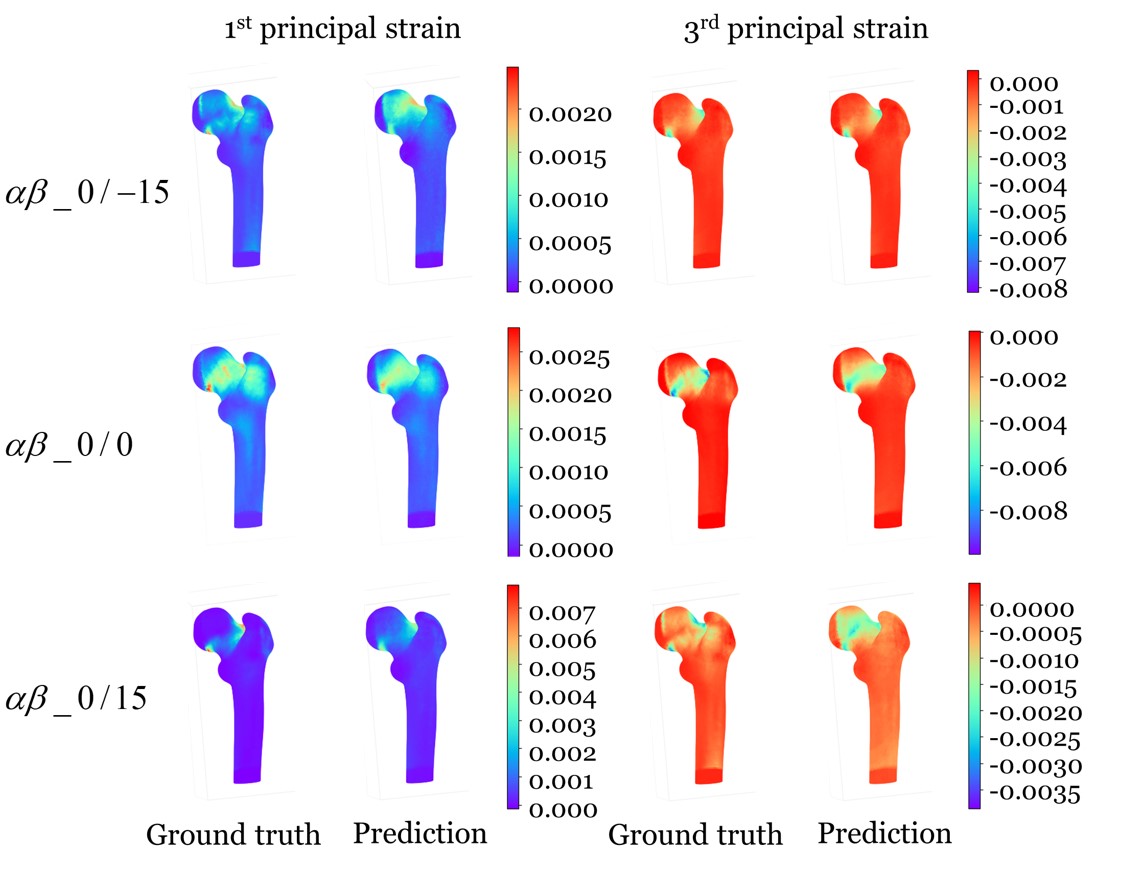
The current research focuses on assessing the hip fracture risk from mechanistic viewpoint utilizng Scientific computing and ML (SciML). In this approach, Quantitative Computed Tomography (QCT) image based 3-dimensional FEA has been conducted to investigate the cumulative effect of anatomical variations in femur and its inhomogeneous material distribution, which varies noticeably between healthy and osteoporotic bone, and the impact load due to fall. We tested a number of ML/DL classfiers to predict fracture risk and stain visulization to idenitfy the fracture locations
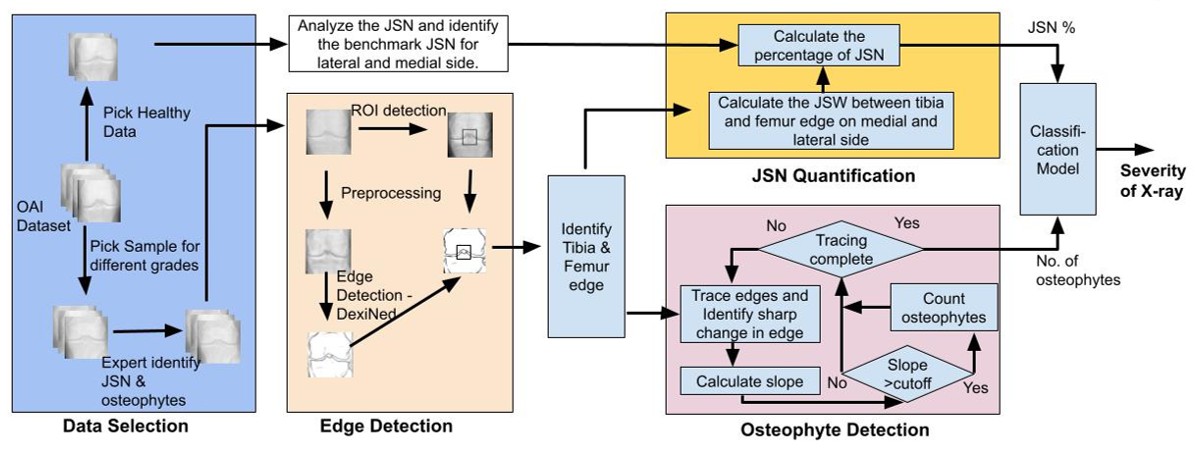
In addition, image-based analysis of clinical X-ray data has been developed to extract quantitative joint-space features for early-stage OA grading. The goal of this work is to develop a automated pipeline for assessing OA grading based in quantitative radigraphic biomarkers.
Our overall goal is to develop a fully automated pipeline for precison diagnostics.
Rabina Awal, Mahmuda Naznin, Tanvir R. Faisal. Machine learning based finite element analysis (FEA) surrogate for hip fracture risk assessment and visualization. Expert Systems with Applications, Elsevier, 264, 125916, 2025 link to PDF